




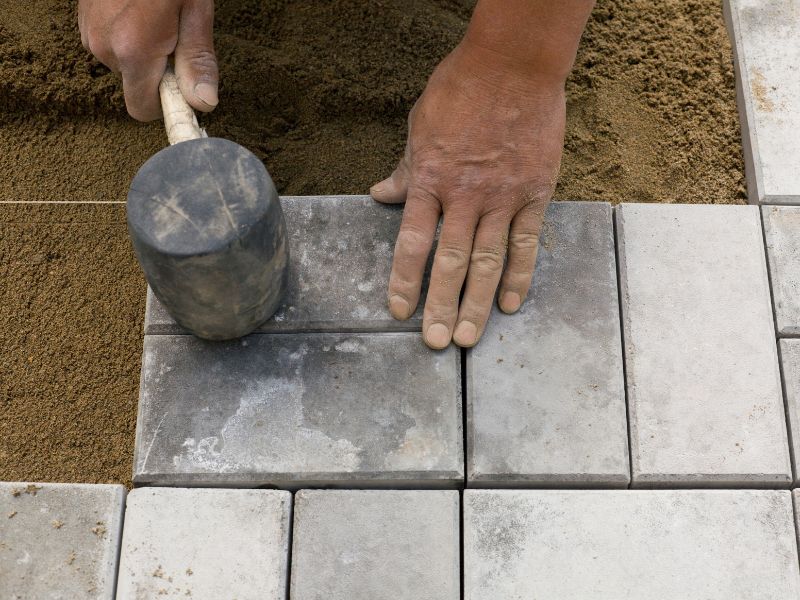
Choosing the right sand for paving slabs is key to a strong, long-lasting finish. The wrong choice can cause uneven surfaces, poor drainage, and movement over time, especially in changing weather conditions.
This guide explains what sand to use for paving slabs, the best sand for pointing slabs, and how the right paving materials support a reliable installation process for any outdoor space.
Approx reading time: 4 minutes
What Sand Is Best for Laying Paving Slabs?
In most cases, sharp sand is the best sand for laying paving slabs.
Buy a sharp sand bulk bag here for your next paving project.
Sharp sand has coarse, angular grains that lock together when compacted.
This creates a firm bedding layer capable of supporting the weight of paving slabs, including concrete and natural stone.
Because of its structure, sharp sand:
- Creates a strong, load-bearing base
- Allows water to drain freely
- Reduces movement over the long term
- Helps prevent uneven surfaces
Can You Lay Slabs on Sharp Sand?
Yes, slabs can be laid directly on sharp sand, but isn’t suited to all types of paving, and preparation is key.
For light-use areas like patios and garden paths:
- Install a compacted sub-base
- Add a level bedding layer of sharp sand
- Place slabs and tap them down with a rubber mallet
This method suits smaller projects. For heavier use or areas exposed to harsh weather conditions, a cement-based mortar bed offers better long-term performance.
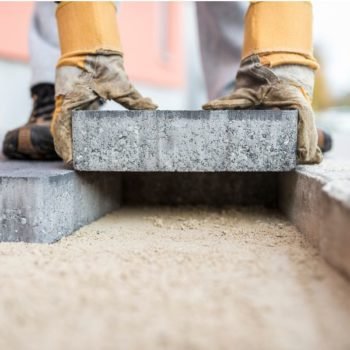
For best results, lay sharp sand over a well-compacted sub-base such as MOT Type 1.
Use a plate compactor to create a stable foundation before laying the slabs.
Can You Use Sharp Sand for Pointing Slabs?
Sharp sand can be used for pointing when mixed with cement, but it is not always the best choice.
Because it is coarse, sharp sand:
- Creates a rougher finish
- Is harder to compact into joints
- Can be difficult to use on natural stone
For a smoother result, building sand is usually preferred for jointing and pointing.
What Sand Should You Use for Pointing Slabs?
The sand used for pointing is different from the sand used for laying.
Choosing the best sand for pointing slabs improves durability, appearance, and resistance to weather conditions.
Common pointing options:
- Building sand mixed with cement
- Kiln dried sand for block paving
- Specialist jointing compounds
Pointing is about securely filling the gaps between slabs. Proper jointing helps prevent weed growth and protects the paving over time.
Which Sand Should You Use for Each Type of Paving?
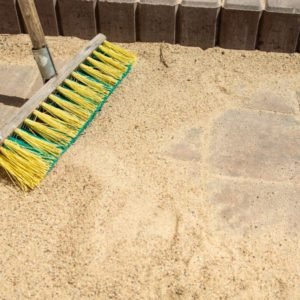
Different paving materials require different laying and jointing methods. Using the correct sand and jointing approach improves strength, appearance, and long-term performance.
Block Driveway Paving
- Base: Sharp sand bedding layer over a compacted sub-base
- Pointing: Kiln dried jointing sand
Concrete Patio Paving
- Base: Sharp sand bedding layer over a compacted sub-base
- Pointing: Cement-based mortar mix
Natural Stone Paving
- Base: Sharp sand bedding layer over a compacted sub-base *
- Pointing: Mortar mix or manufacturer-approved jointing compound
Porcelain Paving
- Base: Sharp sand base layer on a compacted sub-base, and full mortar bed** (essential)
- Pointing: Jointing compound designed for porcelain paving and joints
Always refer to manufacturer specifications when installing natural stone.
*Low-porosity paving may also require a full mortar bed with slurry backing to ensure proper adhesion. Some products also require a specific jointing compound for warranty compliance.
** Porcelain paving has very low porosity and must be laid on a full mortar bed. Traditional mortar mix jointing is not recommended, as porcelain paving requires minimal joint widths. This type of paving usually requires jointing compound specifically made for getting into tight gaps.
Mortar Mix for Pointing Slabs
A traditional pointing mortar uses:
- 4–5 parts building sand
- 1 part cement
This part cement mortar mix creates a workable, durable joint. It performs well across most paving materials and holds up over the long term.
Building Sand vs Sharp Sand for Paving
Knowing the difference between sands helps avoid costly mistakes.
Sharp sand:
- Used for the bedding layer
- Strong and load bearing
- Good drainage
Building sand:
- Used for mortar and pointing
- Smooth and easy to work
- Not suitable as a base
Using building sand for laying slabs often leads to sinking and poor results.
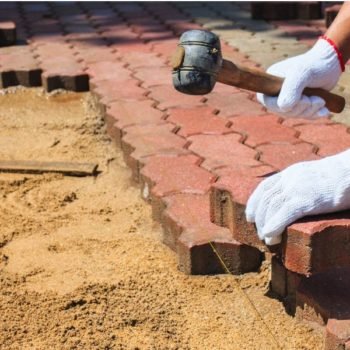
Common Mistakes to Avoid
- Using the wrong sand for the base
- Skipping compaction with a plate compactor
- Uneven bedding layer depth
- Poor jointing and filling the gaps incorrectly
Correct preparation and material choice greatly improve long-term performance.
Choosing the Right Sand for Your Paving Project
For most paving projects, sharp sand provides a strong bedding layer, while building sand or jointing sand works best for pointing.
Using high quality materials, and following manufacturer recommendations, at every stage ensures a stable finish that lasts — helping you create a durable and attractive outdoor space.