




Dealing with stubborn limescale on your taps, dry skin after showering, or appliances that seem to break down too quickly?
Hard water is likely the culprit.
Across many water areas, households suffer from high mineral buildup that damages plumbing and reduces the efficiency of daily home routines.
Investing in a water softener is one of the most effective ways to solve these issues.
This guide breaks down everything you need to know about water softening, how a household water softener operates, key benefits, installation considerations, maintenance tips, and whether you can drink softened water.
Estimated reading time: 7 minutes
Photo by Andres Siimon on Unsplash
Understanding Hard Water
What is Hard Water?
Hard water is simply water that contains high concentrations of dissolved minerals, primarily calcium and magnesium. As rainwater percolates through deposits of limestone, chalk, or gypsum in the ground, it naturally collects these minerals.
While safe to use, the elevated mineral content causes significant everyday practical issues.
Common Problems Caused by Hard Water
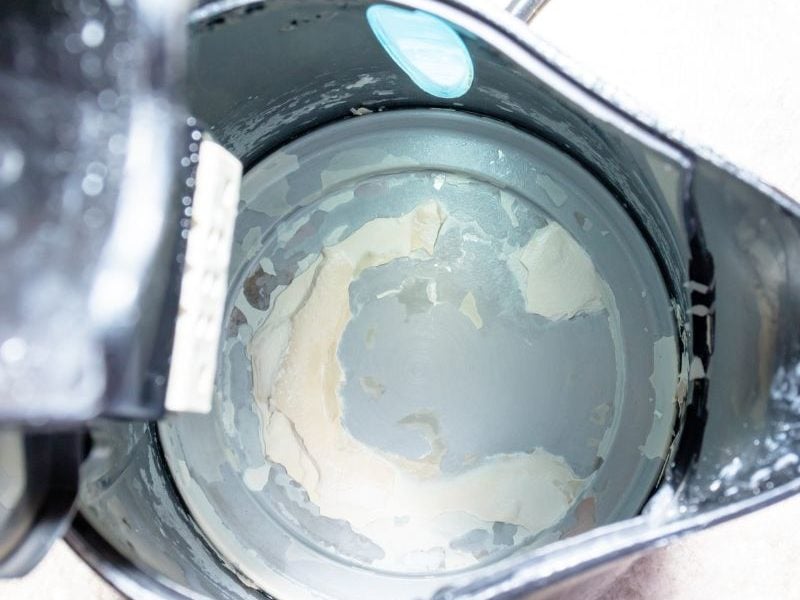
- Persistent limescale build-up on taps, showerheads, kettles, and glassware
- Reduced lathering from soaps and detergents, forcing you to increase your household detergent water usage
- Soap scum residue left behind on bathroom tiles, tub surfaces, and shower doors
- Clogged plumbing pipes and heating elements in boilers over time
- Dry, irritated skin and dull, limp hair following baths or showers
- Stiff, faded clothes after washing them in laundry machines
How Does a Water Softener Work?
The Science Behind Water Softeners
If you have ever wondered how does a water softener work, the answer lies in a simple process called ion exchange designed specifically to remove hard minerals.
A standard water softener system consists of a tall mineral tank containing thousands of tiny resin beads and a separate brine tank.
Here is how a softener system works step-by-step:
- Hard water enters the mineral tank from your main water supply line.
- The resin beads, which carry a negative charge, hold onto sodium ions.
- As hard water flows over the beads, calcium and magnesium ions carry a stronger charge and swap places with the sodium ions to remove hard minerals from the supply.
- The minerals attach to the resin beads, while the newly softened water flows out to your home’s taps and appliances.
- Eventually, the resin beads become saturated with hard minerals and need cleaning.
- The system initiates a “regeneration” cycle, flushing the beads with a concentrated salt solution from the brine tank to wash away the calcium and magnesium, resetting the system.
Salt in Water Softeners
The role of salt in water softener systems is crucial. The salt creates the brine solution necessary to clean and recharge the resin beads during regeneration.
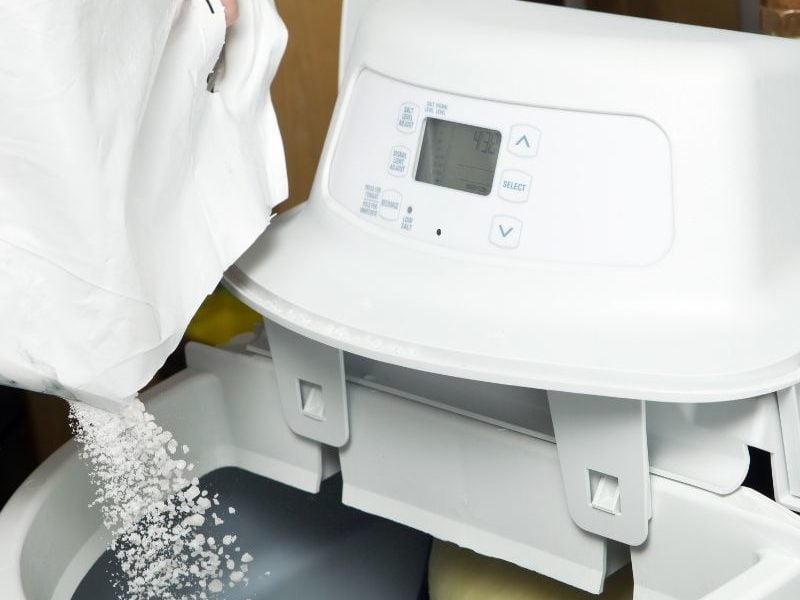
Most homeowners use water softener salt tablets. These compressed salt tablets dissolve evenly and prevent blockages inside the brine tank.
Using a good water softener with high-purity salt ensures continuous performance without damaging the unit’s internal valves.
Choosing the Right Salt for Your Water Softener
Not all water softener salt is the same. The type of salt you use affects performance, maintenance, and overall system efficiency.
The three most common options are salt tablets, granular salt, and salt blocks.
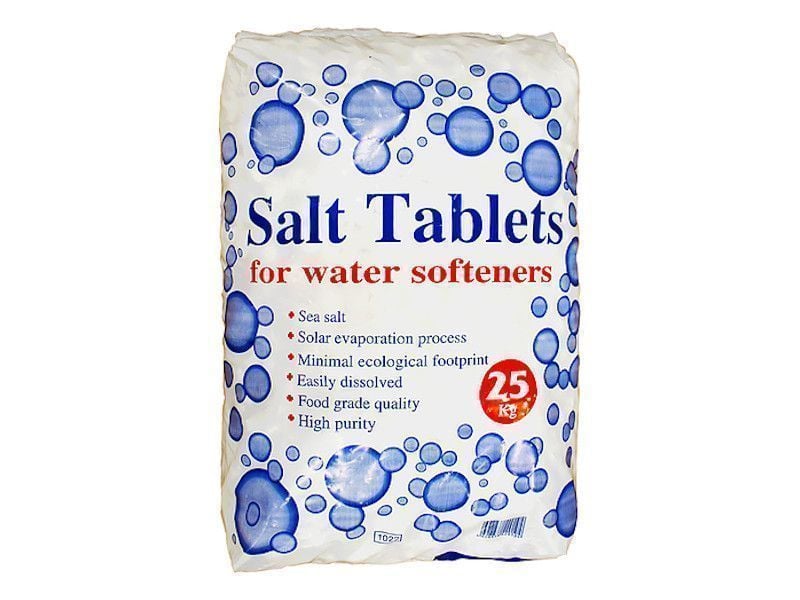
Salt Tablets
Salt tablets are compressed pellets designed to dissolve slowly and evenly in your brine tank.
This controlled dissolving helps prevent salt bridging and reduces residue buildup.
Why homeowners choose granular salt:
- Slow, consistent dissolving
- Cleaner operation
- Reduced risk of blockages
- Easy handling and storage
- Suitable for most modern softeners
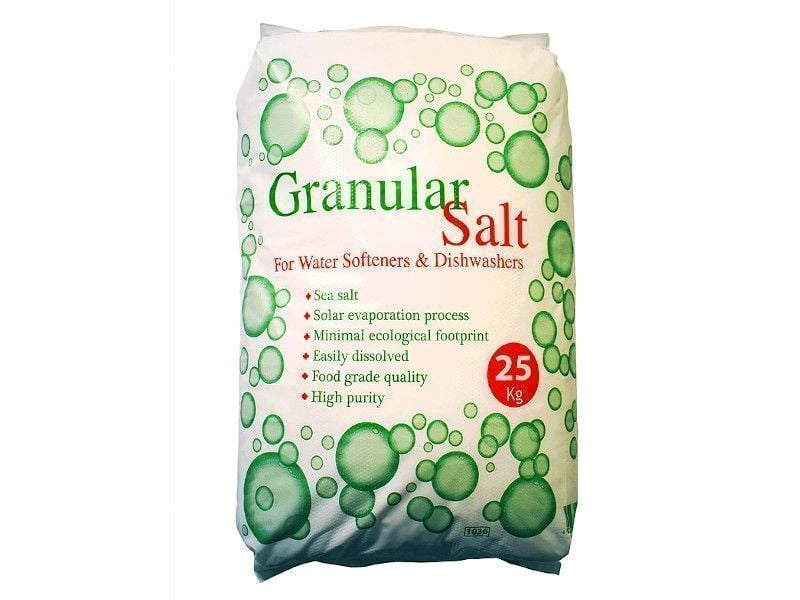
Granular Salt
Granular salt is made up of small salt crystals that dissolve quickly in water. It’s often preferred for older systems or manual regeneration units.
Why homeowners choose granular salt:
- Rapid dissolving
- Cost-effective
- Widely compatible
- Easy to top up
Salt Blocks – Compact and Long Lasting
Salt blocks are solid compressed bricks of salt designed for specific cabinet-style water softeners. They dissolve very slowly and require less frequent refilling.
Why homeowners choose salt blocks:
- Long lasting
- Clean and compact
- Minimal maintenance
- Ideal for space saving systems
Always check your softener’s manufacturer guidelines before using salt blocks, as not all models are compatible.
Benefits of Using a Water Softener
Improved Water Quality
A soft water system transforms your household supply. Soap lathers effortlessly, dishes come out of the dishwasher crystal clear without white spots, and you will no longer need to spend hours scrubbing tough limescale deposits off bathroom fixtures.
Appliance Longevity
Limescale build-up significantly shortens the lifespan of home appliances. Integrating a water softener for washing machine units, boilers, dishwashers, and water heaters prevents scale accumulation on heating elements. Lowering scaling across your appliances optimizes energy and water usage, keeping systems running efficiently while saving thousands in premature replacements.
Skin and Hair Benefits
Using a water softener for shower routines makes a noticeable difference to personal hygiene. Hard water minerals strip natural oils from your body, leaving skin feeling dry and itchy. Softened water allows soaps and shampoos to rinse away completely, leaving skin softer and hair smoother and easier to manage.
Water Softener Installation
How to Install a Water Softener
When considering how to install a water softener, the process depends on your plumbing confidence. While our list serves as a general guide for confident DIYers to follow, hiring a qualified plumber is always recommended.
- Select a location near your main water supply inlet, a drain point, and an electrical outlet.
- Turn off the main water supply and drain the pipes thoroughly.
- Cut into the main supply line and install bypass valves so you can isolate the unit if necessary.
- Connect the water inlet and outlet ports to the softener system.
- Attach the drain line for wastewater discharge during regeneration cycles.
- Connect the overflow pipe and plug the unit into a grounded power socket.
Costs Involved in Installation
Understanding the overall expense helps when budgeting for hard water solutions.
Equipment Costs:
People frequently ask, “how much do water softeners cost”? A standard water softener ranges from £400 to £1,500 depending on capacity, brand, and feature sets.
Installation Costs:
Professional water softener installation generally costs between £250 and £600. The total soft water system installation cost usually averages between £700 and £2,100 for a complete setup.
When evaluating are water softeners worth it, most homeowners find that long-term savings on detergent, lower energy bills, extended appliance life, and plumbing protection easily offset the initial purchase cost within a few years.
Estimates provided from ScaleFreeHome and Costwise, and are accurate at time of this publication
Maintenance and Care
Water Softener Maintenance Tips
Proper maintenance ensures your investment operates smoothly for decades. Basic water softener maintenance involves checking salt levels monthly, using clean salt tablets, and inspecting the brine tank for salt bridges (hard crusts that form across the tank) once or twice a year.
How Often to Add Salt
Check your salt tank monthly. Keep the salt levels at least half full, filling it to roughly 3 to 4 inches above the water level. On average, a standard household uses about one 25kg bag of salt tablets every month.
Common Issues and Solutions
- Salt Bridges: Break up solid salt crusts manually using a broom handle, then remove loose chunks.
- Salt Salting/Mushing: Drain the brine tank, clear out sludgy salt buildup, and refill with fresh salt tablets.
- Hard Water Output: Check if the system bypass valve was accidentally left open, or check if the salt tank has run completely dry.
If you are wondering do water softeners need servicing, the answer is yes. Getting a professional technician to service the internal valve seals, clean the injectors, and test water hardness once every 2 to 3 years prevents unexpected breakdowns.
Is Softened Water Safe to Drink?
Can You Drink Softened Water?
A common question among homeowners in hard water areas is can you drink water from a water softener?
The short answer is yes. For the vast majority of healthy adults, absolutely. The softening process adds a small amount of sodium, but not high levels of dietary salt (sodium chloride).
Side Effects of Drinking Softened Water
While safe for most, there are a few potential side effects of drinking softened water to consider:
- Increased Sodium Intake: Softened water contains slightly elevated sodium levels, which may not be suitable for infants or individuals on strict low-sodium diets.
- Lack of Minerals: Softening removes dietary calcium and magnesium from drinking water, though most people easily obtain these minerals through a balanced food diet.
- Potential Pipe Leaching: Softened water can be slightly naturally reactive; in homes with older unlined lead plumbing, running softened water through drinking pipes is not recommended.
For these reasons, or simply for those who prefer their drinking water filtered for taste, many installers fit a dedicated un-softened drinking water tap at the kitchen sink directly from the main supply line.
Need Advice?
Contact Us!
We are here to help – contact us today to speak to our team and get expert guidance tailored to your household needs!