




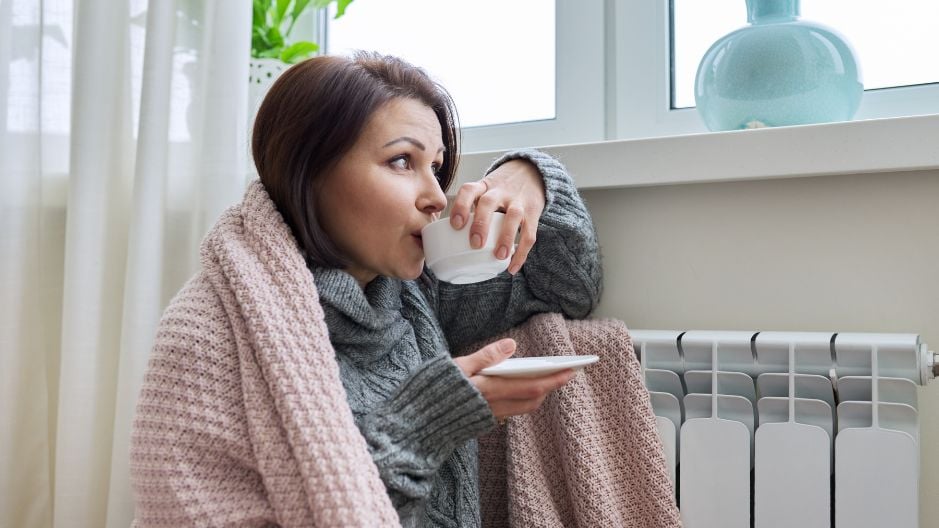
Turning on your central heating expecting a cozy home, only to find cold metal panels, is a frustrating winter nightmare.
When you are left asking, “why are my radiators not getting hot?” it can feel overwhelming to figure out where the breakdown is occurring.
This guide breaks down the most common causes of cold radiators, simple DIY fixes, and when it is time to call in a professional.
Estimated reading time: 3 minutes
Troubleshooting Common Radiator and Heating Issues
Whether you are dealing with just one radiator not working in a bedroom or your boiler not heating radiators across the entire house, cold radiators leave your home chilly and waste energy.
While modern combi boilers are engineered for high efficiency, many radiator issues stem from simple problems you can troubleshoot yourself.
Quick Checks Before You Begin
Before taking tools to your radiators, perform a few initial system checks:
- Check the Thermostat: Make sure your main thermostat is set higher than the current room temperature and programmed to turn on.
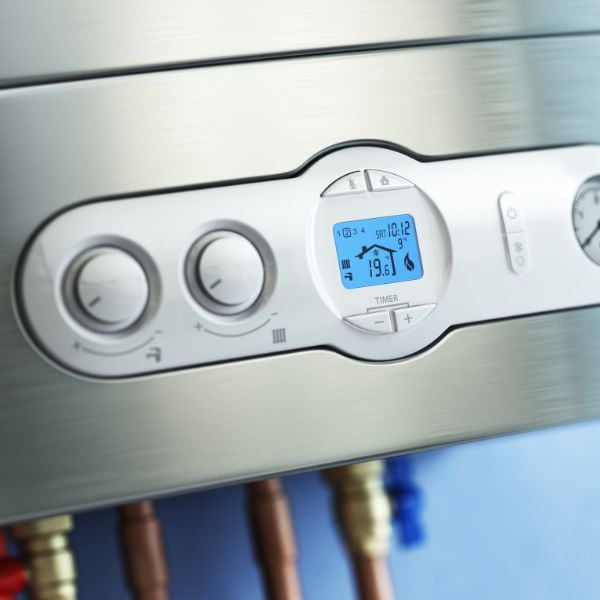
- Check Your Boiler Pressure: Look at the pressure gauge on your unit. If you check your boiler and notice the water pressure drops below 1 bar, the system may lack the force needed to maintain a steady flow of hot water throughout your home.
- Inspect for Recent Power Outages: A recent power cut can knock your unit offline, trip the fuse box, or reset your heating timers to factory defaults. Try resetting your timer clock or following your manual’s reset procedure once power returns.
- Inspect the Display: When you check your boiler control panel, look out for error codes indicating issues like a boiler not heating radiators or a broader system shutdown.
Troubleshooting Cold Radiators by Symptom
Radiator is Cold at the Top, Hot at the Bottom
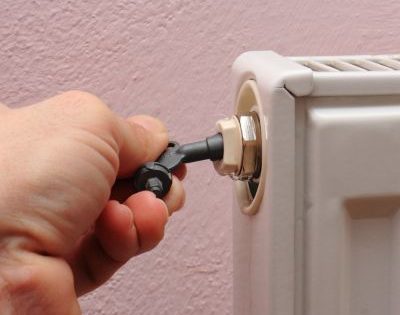
If you notice a single radiator not heating up at the top while remaining warm at the bottom, trapped air is usually the culprit. Air naturally rises to the top of the unit, creating a pocket that blocks the normal flow of hot water from filling the entire panel.
- Fix: Bleed the radiator using a radiator key to release the trapped air until water begins to trickle out.
Radiator is Hot at the Top, Cold at the Bottom
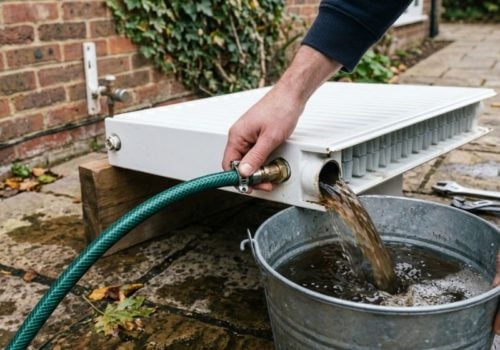
When a radiator not warming up at the bottom remains hot near the top, you are likely dealing with sludge buildup. Over time, rust, mineral deposits, and debris settle at the base of the panel, blocking hot water circulation.
- Fix: A single radiator not getting hot at the bottom may need to be removed and flushed individually with a hose. If multiple units show these symptoms, your entire system may require a professional power flush.
Radiator Stays Cold Despite the Heating Being On
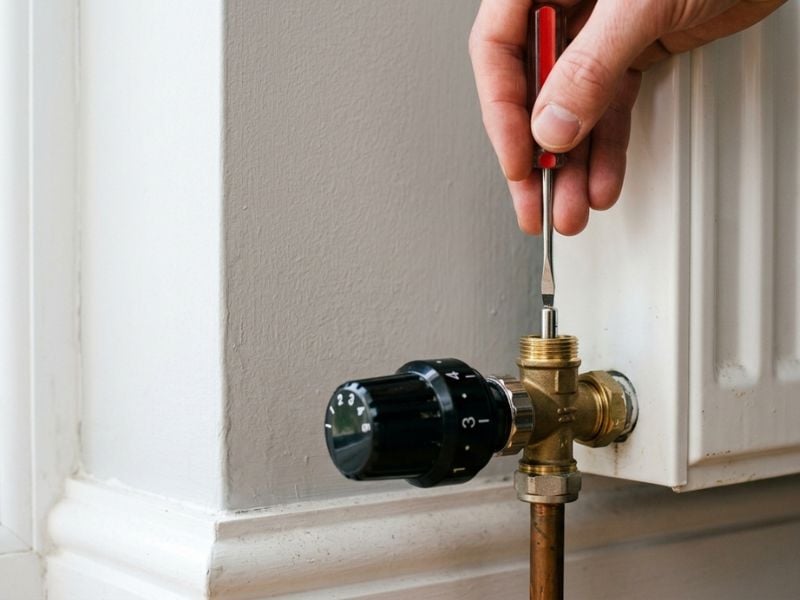
If one unit remains completely cold while the rest of the house warms up, check the Thermostatic Radiator Valve (TRV). The small pin inside the valve head can get stuck in the closed position, especially after months of disuse over the summer.
- Fix: Unscrew the plastic cap of the TRV, locate the small vertical pin underneath, and gently press it down using pliers or a flathead tool.If the pin moves freely and springs back up, your TRV is fine, and the issue is likely an air lock or sludge. If the pin stays stuck down, gently tap the side of the brass valve casing until it pops back up to restore water flow.
No Radiators Are Warming Up, But You Have Hot Water
If your unit fires up and supplies hot water to your taps, but you face a complete central heating shutdown, the issue lies in your system’s distribution components. Common culprits on systems powered by modern combi boilers include a faulty motorized zone valve or a failing central heating pump that cannot push water through the circuit.
- Fix: Check if the heating pump is running or making unusual noises. If the pump or zone valve is faulty, contact an engineer for a replacement.
You Have Heating, But No Hot Water (or Vice Versa)
Experiencing heating but no hot water—or having hot water while your radiators stay cold—often points directly to an internal component in combi boilers called the diverter valve. Because combi boilers heat water on demand for both domestic supply and central heating, the diverter valve must open and close to direct the flow of hot water to either your taps or your radiators.
If the valve gets stuck in one direction, your boiler not heating water properly for washing or heating will require professional repair.
Simple DIY Fixes You Can Try Today
How to Bleed a Radiator Safely
- Turn off your central heating system and allow the radiators to cool down completely.
- Locate the bleed valve at the top end of the radiator panel.
- Place a cloth or small bucket underneath the valve to catch any drips.
- Insert a radiator key into the valve and gently turn it counter-clockwise until you hear air hissing out.
- Once water begins to trickle out steadily, turn the key clockwise to tighten the valve back up.
Need a walkthrough? Check out our guide on How To Bleed A Radiator for instructions and safety tips.
How to Repressurize Your Boiler
- Turn off the power switch.
- Locate the filling loop under or near the unit (usually a silver flexible hose with one or two blue/black valves).
- Open the valve(s) slowly to allow cold mains water into the heating system.
- Watch as you check your boiler pressure gauge until it reaches between 1.0 and 1.5 bar.
- Close the valve(s) completely and turn the unit back on.
When to Call a Certified Heating Engineer
While basic troubleshooting like bleeding air or unsticking valve pins is safe for home handymen, certain problems require licensed professionals:
- Gas Safety Inspections: Any work involving internal gas components or gas supply pipework on all unit types, including combi boilers, must strictly be carried out by gas safe registered engineers to protect your home from dangerous leaks.
- Persistent Pressure Drop: If you regularly check your boiler and find it continually loses water pressure, a gas safe engineer should inspect the unit for internal component leaks or an expansion vessel breakdown.
- Issues After an Electrical Outage: If a major power cut causes your system control board to trip permanently or show persistent error codes that won’t clear after a reset, call in qualified gas safe registered engineers to inspect the electrical safety systems.
- Diverter Valve or Pump Failures: Replacing internal unit parts or zone valves requires technical expertise and safety compliance.
- Persistent System Sludge: Heavy sludge build-up across multiple rooms requires specialized chemical flushing equipment.
Summary
When asking ‘why are my radiators not getting hot’, start with the simplest fixes: bleed trapped air from cold radiator tops, check for stuck TRV pins, and always check your boiler to ensure your water pressure sits between 1.0 and 1.5 bar.
If you continue to experience system-wide issues like a boiler not heating water or a stuck diverter valve on your combi boilers, consult a gas safe engineer to safely restore your heat.
Find a Gas Safe Engineer Near You
When it comes to gas appliances, safety should always be your top priority.
Never attempt to open or repair internal boiler components yourself unless you are qualified to do so.
If your troubleshooting points to an internal fault or persistent pressure issue, always hire an accredited professional.
You can easily locate certified local technicians or verify a heating contractor’s credentials using the official Gas Safe Register tool.
Simply enter your postcode to ensure your heating system is serviced safely and legally.
Related Blogs
Not sure which plumbing supplies or replacement parts you need?
We’re here to help
Our branches are always on hand to talk through your heating issues and point you in the right direction.