




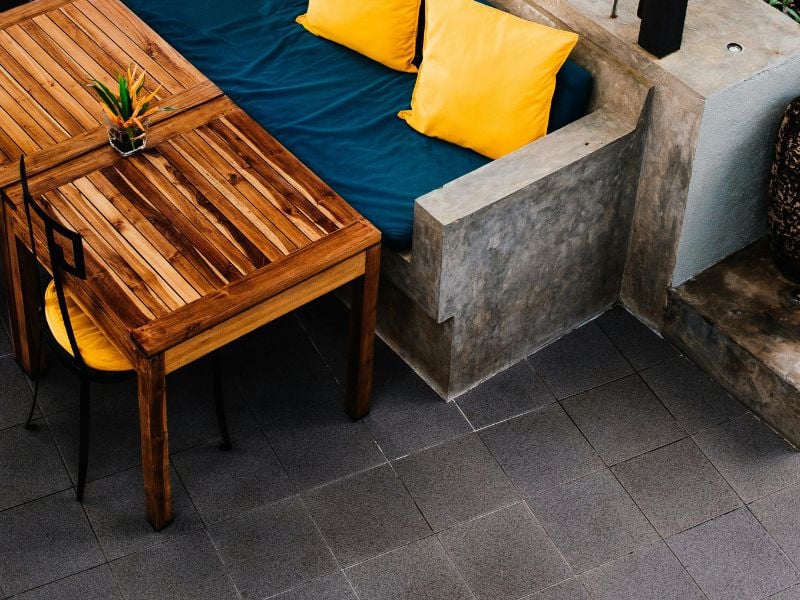
A patio is an extension of your indoor living space, offering a place to relax, entertain, and enjoy the outdoors.
Keeping it in top condition enhances the overall look of your garden and extends the life of your paving.
Here is everything you need to know about how to clean patio slabs so you can restore your outdoor space efficiently.
Estimated reading time: 8 minutes
Photo by Rachel Claire on Pexels
The Importance of Keeping Your Patio Clean
Regular maintenance prevents dirt, moss, and algae from taking over your patio areas. Left unchecked, organic growth can make surfaces slippery and cause long-term structural damage to stone and mortar. Committing to regular cleaning keeps your patio safe, visually appealing, and structurally sound over the long term.
Common Types of Patio Surfaces
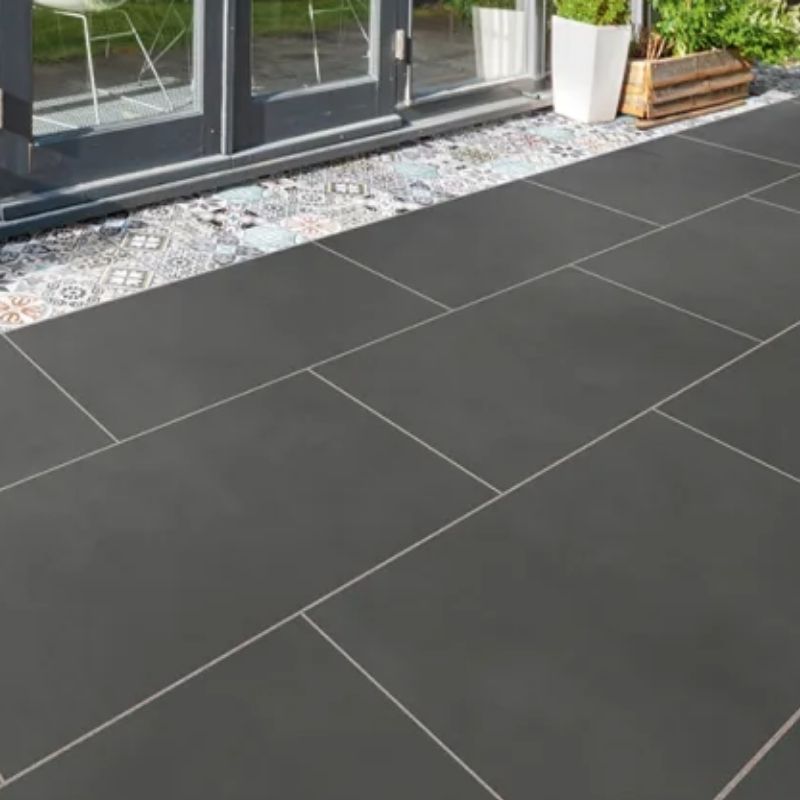
Different materials require tailored approaches when you clean a patio:
- Indian Sandstone
Porous and susceptible to acid damage if cleaned with brick acid or harsh chemicals.
- Concrete Slabs
Prone to holding onto tough stains and black spot algae.
- Block Paving
Weeds often take root between the narrow sand joints.
- Porcelain
Minimal effort to scrub down compared to natural stone.
Top tip: Always check your cleaner is suited to the paving material
Tools and Materials Needed
Before starting, gather the right equipment based on your patio surface and preferred cleaning method:
- Stiff-Bristled Broom or Scrubbing Brush
For sweeping debris and scrubbing stubborn dirt and grime
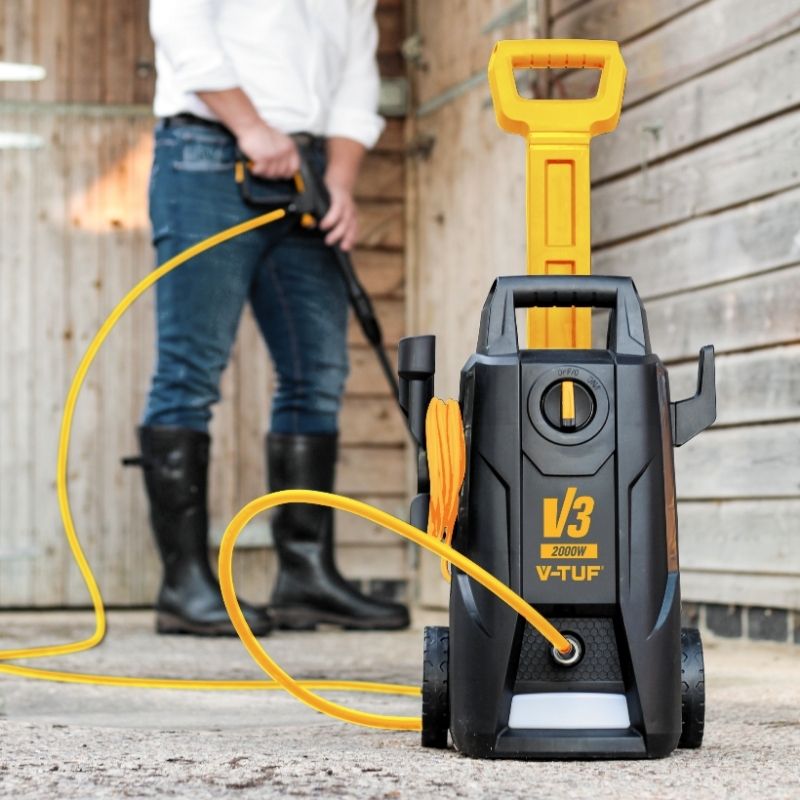
- Pressure Washer (Optional)
For deep cleaning or heavily soiled areas quickly
- Garden Hose with Spray Nozzle
For rinsing without high pressure
- Buckets & Sponges
For mixing solutions and spot-cleaning delicate areas.
Top tip: Don’t forget to protect your eyes, hands and feet. Gloves, boots and eyewear will help protect you against debris, dust and chemicals.
Best Patio Cleaners Available
Choosing a good patio cleaner depends entirely on the severity of the grime and your specific paving material.
Specialized treatments, such as dedicated patio stone cleaners, patio algae cleaners, and patio black spot removers, are formulated to target embedded organic dirt and lichens without destroying your stone.
For a general, all-purpose cleaning solution, “spray and leave” cleaners are convenient. Marshalls Green Away Outdoor Cleaner is a popular choice.
Simply apply and let the wind and rain break down green algae and moss over time, leaving a protective barrier that helps prevent regrowth.
Always choose patio slab cleaners that are safe for your surface. This matters most for porous materials like Indian sandstone.
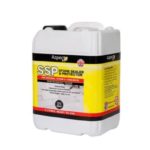
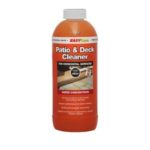
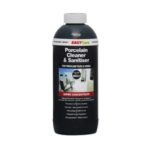
Discover Our Trusted Patio Cleaning Solutions
Homemade Patio Cleaner Solutions
If you prefer an eco-friendly or budget-conscious approach, simple household ingredients work remarkably well. Mixing warm water with mild dish soap is the most cost effective cleaning solution and easily removes dirt from the surface.
For tough grime, mix equal parts white vinegar and water. This makes a natural patio cleaner for non-limestone surfaces.
Baking soda mixed with warm water also helps break down stubborn organic spots naturally. For a standard 10 litre bucket, a heavy squirt of dish soap, or 10 to 20 tablespoons of baking soda will suffice.
Step-by-Step Guide to Cleaning Your Patio
- Clear the entire space by moving all garden furniture, plant pots, and outdoor ornaments.
- Use a stiff-bristled broom to sweep away leaves, loose dirt, and surface debris.
- Pull out any visible weeds growing between the paving joints by hand or with a weeding tool
Using a Pressure Washer:
- If you choose to jet wash, put on safety eyewear.
- Keep the nozzle angled at 45 degrees
- Maintain a distance of at least 30 cm from the surface to prevent etching the stone or blowing out the jointing sand.
Cleaning Without Chemicals or Power Tools:
- Fill a bucket with warm water and mild dish soap or baking soda.
- For a standard 10 litre bucket, a heavy squirt of dish soap, or 10 to 20 tablespoons of baking soda will suffice
- Dip your deck brush into the mixture and prepare to use manual scrubbing power.
- Pour or spray your chosen chemical cleaner or homemade solution evenly across the paving slabs.
- Let the solution dwell on the surface for 10 to 15 minutes to loosen stubborn stains, algae and dirt
- Ensure the mixture doesn’t completely dry out while working
Use your stiff-bristled brush to work the cleaner deep into the surface texture:
- Indian Sandstone and Natural Stone: Scrub gently along the natural grain of the stone using soft to medium bristles.
- Concrete Slabs: Apply firm circular motions with a heavy-duty broom to lift deeply set grime.
- Rinse the entire surface well with clean water. Use a garden hose or a low-pressure setting on your pressure washer. Wash away all soap residue.
- Allow the patio to air-dry completely before moving your garden furniture and decor back into place.
Specific Surface Care & Solutions
Knowing how to clean paving slabs correctly depends heavily on the material. Different paving surfaces react differently to cleaning chemicals and high-pressure washing:
Surface Type
Concrete Slabs
Indian Sandstone
Natural Stone
Porcelain
Best Cleaning Product Type
Heavy duty patio cleaner
Sandstone cleaner
Neutral pH stone cleaners
Porcelain cleaner
Suitable for Acid Cleaners?
Caution *
No
No (especially Limestone)
Yes (dilute well, test first)**
Suitable to Pressure Wash?
Yes
Caution (use lower pressure)
Caution (use lower pressure)
Yes
* Avoid using on decorative, dyed and pre-cast concrete. Use a weak wash on undyed concrete, and test an inconspicuous area first.
** Hydrofluoric acid can damage porcelain. Keep acid based cleaners away from cement based grout, and always test an inconspicuous area first.
Maintenance Tips for a Clean Patio
How Often Should I Clean My Patio?
Establish a routine sweep once a week to prevent dirt, leaves, and organic debris from settling into the porous stone.
Performing a deep clean twice a year – once in early spring and once in late autumn – keeps your outdoor space fresh year-round.
What Is the Best Way to Stop Moss and Algae Growth?
Keep nearby trees and shrubs trimmed to maximize daylight exposure and improve airflow across the paving.
Standing water creates the ideal breeding ground for moss and algae, so ensure your patio has proper drainage.
Re-sanding and filling in joints regularly is your best defence against weed growth.
Seasonal Maintenance Guide
Spring is all about clearing away the harsh effects of winter and prepping your outdoor space for heavy use.
- Clear Off Debris
Sweep away leaves, mud, and twigs that have settled over the colder months.
- Inspect for Freeze-Thaw Damage
Check paving slabs for cracks, loose mortar, or dislodged jointing sand caused by frost expanding during winter.
- Perform a Deep Clean
Use a patio cleaner or pressure washer to remove winter grime, slippery algae, and built-up lichen before sunny weather sets in.
- Top Up Jointing Sand
Rain and frost can wash away jointing material; sweep fresh kiln-dried sand or jointing compound into the gaps to lock slabs in place and block spring weeds.
- Apply a Protective Sealer
If you use a patio sealer, early spring on a dry, mild day is the best time to apply it, giving your stones a defensive barrier against summer spills and rain.
Summer brings the most foot traffic, outdoor dining, and sunlight, making it essential to protect against stains and surface wear.
- Sweep Weekly
Keep dust, pollen, and lawn clippings off the stone so they don’t get ground into the surface by foot traffic.
- Treat Food and Drink Spills Immediately
Barbecue grease, wine, coffee, and bird droppings can quickly stain porous natural stone like Indian sandstone; wash them away instantly with warm water and mild dish soap.
- Manage Weeds Early
Pull out any small weeds popping up in the joints before their roots expand and push the slabs out of alignment.
- Reposition Furniture Occasionally
Move heavy plant pots, umbrellas, and outdoor sofas slightly throughout the season to allow air to circulate beneath them and prevent uneven weathering or dark damp spots.
Autumn maintenance centers on managing fallen foliage and preparing the surface for wetter, colder conditions.
- Clear Leaves Frequently
Fallen leaves release natural tannins as they decompose, leaving stubborn brown stains on light-colored paving slabs. Use a leaf blower or stiff broom to clear them at least twice a week.
- Trim Surrounding Vegetation
Cut back overhanging tree branches, ivy, and garden shrubs to allow maximum sunlight and airflow to reach the patio, reducing damp spots where moss thrives.
- Clear Drainage Channels
Ensure patio gutters, French drains, and surrounding lawn edges are free of mud and leaves so heavy autumn rain drains away quickly.
- Treat Early Algae Spores
Apply an eco-friendly patio algae cleaner before temperatures drop too low, killing off spores before they turn into a slick hazard in the damp autumn air.
Winter care focuses on preventing physical damage from freezing temperatures and safely managing icy hazards.
- Store or Cover Outdoor Items
Move heavy planters onto pot feet to lift them off the paving, allowing water to drain beneath them and preventing freeze-cracking.
Store or cover garden furniture to stop rust or wood stains from bleeding onto the stone.
- Avoid Heavy Rock Salt
Traditional de-icing rock salt can penetrate porous stone, crystallize, and cause the surface layer to scale or flake off during freeze-thaw cycles.
- Use Safe Ice-Melt Alternatives
Use sharp grit, sand, or eco-friendly calcium magnesium acetate (CMA) for traction on icy slabs instead of harsh chemical salts.
- Gently Clear Snow
Use a plastic shovel rather than a sharp metal-edged shovel when clearing snow to avoid scratching or chipping natural stone and concrete surfaces.
Related Blogs

Need Advice for Your Specific Paving Type?
Pop into your local Turnbull branch, or drop us a message, to speak with our team about the best care methods for your outdoor space.